
Also Known As: Andaman Foxface, Red Fin Foxface
Compatibility and Behavior
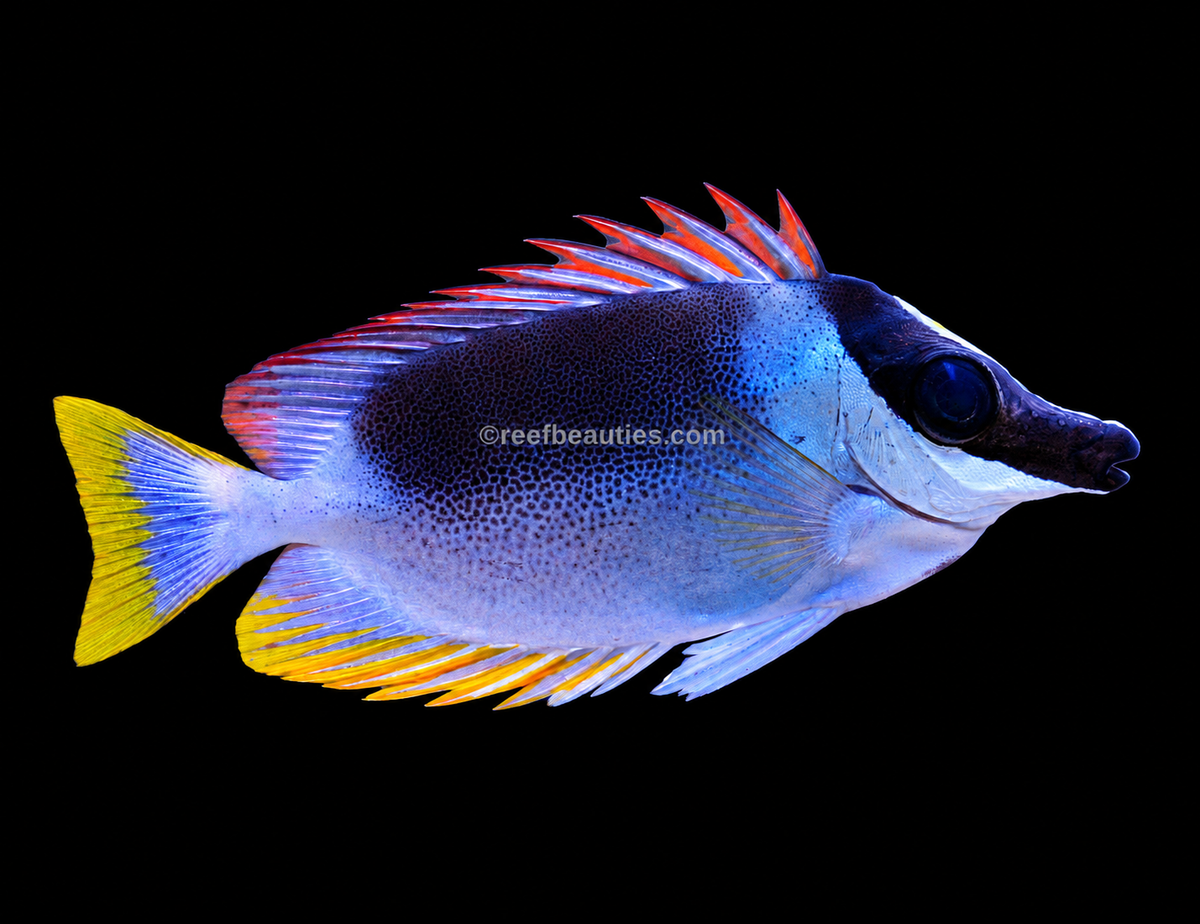
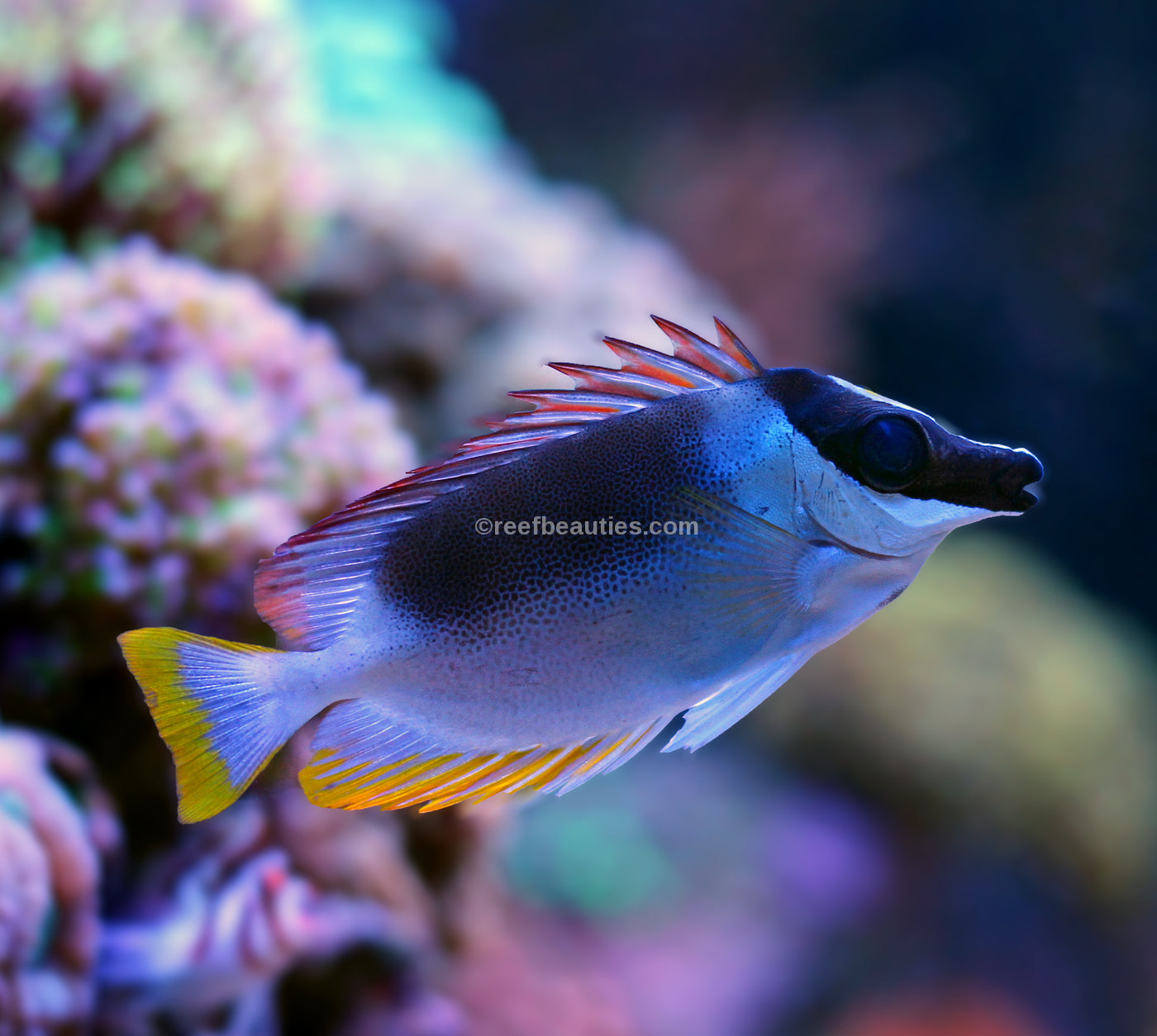
The Magnificent Foxface (Siganus magnificus) is one of the most graphically striking rabbitfish available, built on a clean white to pearly base broken by a large blackish saddle-like blotch across the upper back. A bold black stripe runs across the face like a mask, encircling the eye and separating a white snout from the white forebody, and the fins finish the look with bright yellow margins on the pectoral, anal, and caudal fins plus a distinctive pale red margin on the soft dorsal, which is where the Red Fin name comes from. Note on stress coloration: like its relatives, it can drop that crisp pattern in seconds, replacing it with mottled discoloration while erecting its dorsal spines when sleeping or startled, so a suddenly patchy fish is usually just resting or nervous rather than sick, and the color returns as it settles. These are tireless, graceful grazers that work the tank from mid-water down through the day, picking algae much like a tang, and many reefers appreciate their appetite for hair algae and bubble algae. Reef compatibility carries the standard rabbitfish caveat: a well-fed specimen usually leaves corals alone, but an underfed one may nip, so steady greens are the real safeguard. Fish compatibility is genuinely easy, since the venomous dorsal spines mean even puffers, triggers, and large angels give them a wide berth, while their peaceful disposition means they won't bully gobies, cardinalfish, damsels, or wrasses, and a confident foxface often draws shyer fish out into the open. The firm rule is one per tank, as they can be territorial toward other foxfaces and rabbitfish. Handling deserves real caution, as the 13 tall dorsal spines plus the anal spines carry venom and can inflict a painful sting, so wear gloves and know where the fish is before reaching in.
Aquarium Requirements
This is an active, wide-ranging swimmer that reaches a solid adult size, so a permanent home of 125 gallons or larger with a long footprint is what it genuinely needs, and undersized tanks tend to produce a fish that paces the same circuit all day instead of grazing naturally. Build around generous open swimming lanes fronting plenty of mature live rock, which serves as both grazing pasture and as caves to wedge into overnight, since a secure retreat noticeably reduces stress in this somewhat shy species. Encourage rockwork where microalgae can establish, provide moderate to strong flow with good surface agitation, and keep lighting moderate, since this fish naturally favors softer light. Adding one to a well-established tank with existing algae makes it feel right at home. Supplement grazing with dried nori or Ulva on a clip at least three times a week along with spirulina flakes, herbivore pellets, fresh Gracilaria, and vegetable-based frozen preparations, offering meaty items only in moderation, and feed two to three times daily. A tight-fitting lid is recommended since they can jump when spooked.
Specifications
Approximate Size: Md: 2.5–3.5", Lg: 3.5–4.5", XL: 4.5–6"
Diet: Herbivore; dried nori and Ulva on a clip, fresh Gracilaria, spirulina flakes, herbivore pellets, and vegetable-based frozen foods, supplemented by natural algae grazing on live rock, with occasional mysis or spirulina brine, fed 2–3 times daily
Origin: Eastern Indian Ocean
Care Level: Easy to moderate
Reef Safe: With caution
Temperament: Peaceful
Special Considerations: Venomous dorsal and anal spines can inflict a painful sting, so wear gloves and know where the fish is before reaching in.