
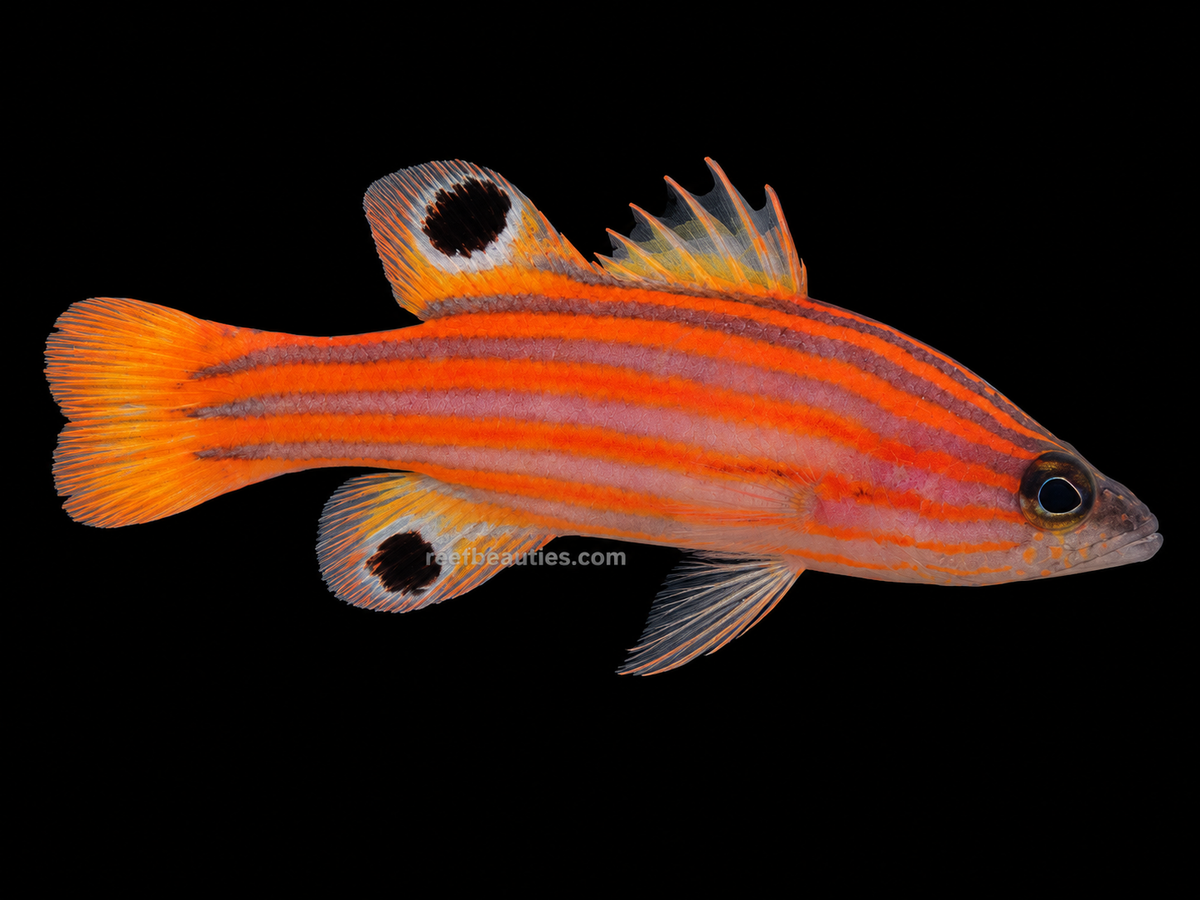
Also Known As: Swales Swissguard Basslet, Swalesi Basslet
Compatibility and Behavior
The Swales Candy Basslet (Liopropoma swalesi) is a small, arrow-shaped jewel of a reef basslet. A cream to pale lavender body is traced by several reddish-orange to purple-red horizontal stripes running from the snout straight back to the tail, set off by a dusky gray to dark snout. You also can't miss the black ocelli on the second dorsal and anal fins. The body is stocky and torpedo-like with a rounded tail, and healthy specimens hold a soft iridescence under subdued light. This is a genuine shadow dweller, collected from dense coral and cave networks on deep coastal slopes, and it behaves accordingly: expect it to hover just inside a crevice, sometimes upside down against a cave ceiling, and to emerge most confidently at dawn and dusk. It's fully reef safe and won't touch corals, clams, or anemones, though it may take very small shrimp, amphipods, and copepods while foraging, so larger ornamental shrimp like skunk cleaners, fire shrimp, and peppermints are generally left alone. It's peaceful but reclusive, and the biggest compatibility mistake is housing it with boisterous, fast-feeding fish, since tangs, larger wrasses, dottybacks, and aggressive eaters can intimidate it into staying hidden, so it does best surrounded by calm company. Excellent companions include small gobies, blennies, firefish, dartfish, cardinalfish, anthias, clownfish, and calm wrasses. It may get territorial toward its own kind and similar cave-dwelling basslets competing for the same crevice, so keep just one unless the system is 75 gallons or larger. A new arrival commonly hides for several days to a week before settling in, which is completely normal.
Aquarium Requirements
Because this species is so cryptic, a smaller display is genuinely the better choice, and a 20 to 30 gallon tank lets you actually enjoy the fish rather than losing it in a big reef. What matters most is architecture: build deep, interlocking rockwork with multiple caves, tight crevices, and shaded overhangs, since a fish this cave-oriented needs several immediate escape routes before it'll feel secure enough to come out and feed. Subdued lighting is strongly preferred and reflects its deep-reef origins, and running actinics or lower-intensity fixtures will noticeably increase how often you see it. Moderate, cross-flowing current that doesn't blast directly into the cave mouths works best, paired with a sandy substrate and a mature system with established micro-life to pick at between meals. A tight-fitting lid is not optional, as Liopropoma basslets are well-documented jumpers. Feeding rewards a little strategy: target small portions directly toward the fish's favorite hangout with a pipette or baster during dimmer lighting, and offering live blackworms or live brine during the first days often triggers a reliable feeding response. Handle it with a water-filled container rather than a net, which protects its delicate skin, and give new arrivals a slow, undisturbed acclimation.
Specifications
Approximate Size: 1–1.75"
Diet: Carnivore; frozen mysis, vitamin-enriched brine shrimp, copepods, and finely chopped shrimp, clam, squid, and marine fish flesh, with small carnivore pellets accepted once settled, fed 1–2 small meals daily
Origin: Western Pacific
Care Level: Moderate
Reef Safe: Yes
Temperament: Peaceful and reclusive toward other species, but can be territorial toward its own kind, so keep singly in smaller systems
Special Considerations: A shy, cave-dwelling fish that needs deep rockwork with several retreats, subdued lighting, and calm tankmates to feel secure enough to come out and feed well. May take very small shrimp and pods while foraging.